Conditioning for Fighters at Muay Thai Gym condition1combat.com
Conditioning is not a generic buzzword at a fight gym. It is the ability to express skills at full speed, under pressure, for as long as the bout requires, and still think clearly enough to make good decisions. At Condition 1 Combat Center, the work behind that sentence happens on pads, heavy bags, the track, the mats, and the weight floor. It is structured, measurable, and tied directly to the demands of Muay Thai. If you walk into our muay thai gym with good technique but no engine, the first time you get clinched and leaned on, your legs tell the truth. Likewise, if you are a cardio machine who cannot throw with intent after chewing a kick, the other corner finds out. Proper conditioning harmonizes both sides.
What follows reflects how we train fighters at our facility and what we have learned coaching athletes across Muay Thai, MMA, boxing, and jiu jitsu. The details matter, from how long your hard bursts last to the exact rest you take between flurries, so we map training to the physiological and tactical shape of a fight.
What fight conditioning really means in Muay Thai
Muay Thai demands repeat bursts of power, heavy isometrics in the clinch, and a steady aerobic base to recover between efforts. A typical amateur bout runs three rounds of two or three minutes with one minute of rest. Professional bouts extend to five rounds. Inside that framework, exchanges look like 3 to 10 seconds of high output, followed by a few seconds of hand fighting, framing, or repositioning. Clinch exchanges can hold 10 to 30 seconds of sustained isometric tension with peel-offs and knees.
Energy system labels help us choose work, not preach dogma. Fighters need:
- Alactic bursts for sharp entries, fast combos, and counters at high speed without heavy burn.
- Glycolytic capacity to repeat hard flurries when exchanges chain together and heart rate climbs.
- A big aerobic base to restore phosphocreatine, clear metabolites, and keep the brain online.
You develop all three, but the recipe changes through camp. Early phases build the base and general power. Mid camp shifts toward repeatability and specificity. Late camp dials volume down while keeping speed and sharpness high.
Start with assessment, not assumptions
At condition1combat.com we prefer numbers and repeatable benchmarks to gut feelings. If you cannot measure, you guess. Tests we use depend on the athlete’s level and injury history, but we often include:
- Round profile tests on pads or bag. Three rounds of three minutes with one minute rest, where the goal is consistent strike count and power per round. Coaches tally contacts and note drop offs. A simple example is 30 seconds steady hands, 15 seconds burst, repeated. If round three drops by more than 15 percent versus round one, conditioning and pacing need work.
- Heart rate recovery. We capture peak HR at the bell, then check 60 seconds into rest. A drop of 30 to 50 beats points to a robust aerobic base. Slower drops are a flag.
- Clinch endurance. Two to three minutes of continuous clinch pummeling with positional resistance. We track posture collapse, grip swaps, and knee density every 30 seconds. Many strikers gas here even if their bag output is good.
- Power proxies. Medicine ball rotational throws for distance and a simple jump test tell us how you express hip power. These are quick and safe for most athletes.
- Running or erg tests as needed. A 1.5 mile run time or 2k row gives a baseline for aerobic work. We do not live by these, but they anchor early conditioning.
We revisit a short version of these every two to three weeks. That cadence balances feedback with training flow. When improvements flatten, we change the stimulus. When fatigue markers rise, we pull back.
Principles we follow when building fight engines
These are not slogans on a wall. They are constraints we respect when we build weeks and sessions.
- Map intervals to the fight. Bursts of 6 to 12 seconds with 45 to 60 seconds easy pace build the repeatability you actually need in Muay Thai.
- Keep the easy easy. Zone 2 work builds capacity without stealing juice from skill sessions. If you cannot nasal breathe and hold a short conversation, it is not easy work.
- Strength supports endurance. Higher force at lower effort means less gas burned per strike or frame. We lift to raise ceilings, not to chase soreness.
- Specificity increases as the fight nears. You taper general work and let pads, bag rounds, and controlled sparring carry more of the conditioning load.
- Recovery is a skill. Sleep, nutrition, and rest-day movement matter more than the perfect interval on Tuesday.
Aerobic base work that pays rent on fight night
The aerobic base is the quiet foundation of every hard round. It lets your heart rate drop quickly in the corner and keeps your head clear enough to read fakes in round three. We build it with steady-state sessions and tempo intervals chosen to respect shin and knee health.
For most fighters, two base sessions per week for 30 to 45 minutes are enough outside of pad and bag rounds. Cycling, rowing, incline walking, and light roadwork all work. If running hurts or you are heavy on sparring volume, we slide toward the bike or rower to save joints. You should finish these sessions feeling better than you started. On a monitor, that looks like 60 to 75 percent of HR max. If you do not track heart rate, use breath. You should speak in full phrases without gasping.
Tempo intervals bridge the gap between easy work and fight intensity. A practical structure is 6 to 10 efforts of one minute at a brisk but controlled clip, with one minute easy in between. On the road, that might be a float-run where your stride lengthens a touch, not a sprint. On the bike, raise resistance two or three notches, then spin easy. On the bag, a minute of steady combinations at medium power followed by a minute of footwork and touch shots. The goal is rhythm and consistency, not death marches.
Power and repeatability without frying your nervous system
You cannot fake sharpness. Power comes from how fast you can recruit and coordinate muscle in the right pattern. Conditioning helps you repeat that skill under fatigue. We use short, crisp alactic intervals early, then stack them more frequently into skill work mid camp.
Two go-to sessions:
- Medicine ball strikes and throws. Ten sets of 4 to 6 reps per pattern, full rest between sets. Think rotational throw against a wall, slam to sprawl, scoop toss with a step. The intent is maximal speed each rep, not sweat volume.
- Repeat sprint style pads. Coaches call 8 to 12 second flurries, then 40 to 60 seconds of lighter touch, re-centering, and breathing through the nose. We run 12 to 20 reps depending on phase. By round three, discipline matters. If the flurry quality drops, we cut reps or increase rest.
If you live on high intensity for too long, the wheels come off. The nervous system starts to feel flat, sleep gets choppy, and skill sessions suffer. We rotate stressors. A heavy repeat sprint day on Tuesday means Wednesday skill is crisp but not volume heavy.
The clinch problem, solved by deliberate work
Clinch is where otherwise fit fighters melt. It is a mix of isometric strength, grip endurance, hip dexterity, and posture under load. We train it as its own quality, not an afterthought.
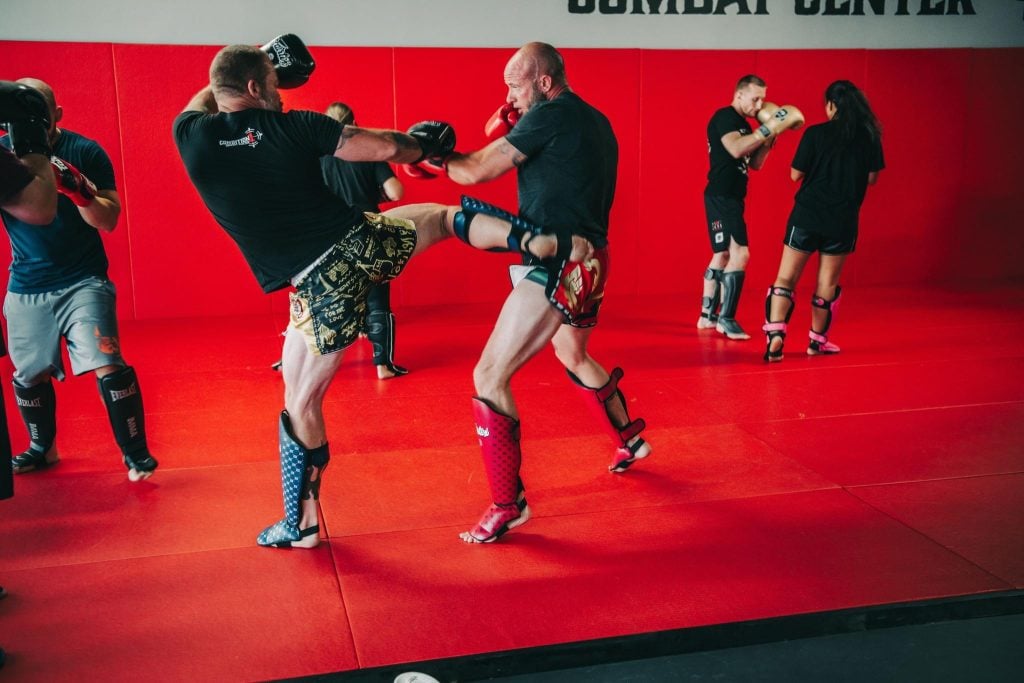
A typical clinch block after pad rounds might be three to four https://landenqxxv330.summitviewdaily.com/posts/confidence-starts-here-in-spring-tx-kids-martial-arts-condition-1-combat-center sets of 90 seconds with 60 seconds rest. Partners fight for head position, inside ties, and frames while cycling knees on the call. We look for posture loss in the last 30 seconds. If the upper back rounds and hips drift back, the set is too long or posture strength is lacking. We supplement with neck and grip work that borrows from our bjj gym programming. Towel pull ups, gi lapel grip hangs, and partner neck isometrics carry over well. If you also train Brazilian jiu jitsu at Condition 1 Combat Center, you have extra places to build this engine.
Strength that makes conditioning easier
Skill is king, but strength makes every skill cheaper. Think of strength work as lowering the energy cost of your strikes, checks, and pummeling. Two to three full body sessions per week work for most fighters in general prep. Closer to fights, we drop to one or two short lifts to hold the line.
We build around:
- Lower body: trap bar deadlifts or front squats for sets of 3 to 5, Bulgarian split squats for 6 to 8.
- Upper body push and pull: push press or landmine press for 3 to 5, weighted pull ups or chest supported rows for 5 to 8.
- Posterior chain and trunk: Romanian deadlifts for 5 to 6, anti rotation presses, suitcase carries, and Copenhagen planks.
Speed work finds a home in this block too. Light loaded jump squats or band assisted jumps for sets of 3, and med ball throws between heavy sets keep power high with low fatigue. The point is intent and quality. If bar speed slows to a grind, the set is over.
A sample week in specific preparation
As you approach the fight, your best conditioning tool is the sport itself. We adjust for age, fight history, and job stress, but a five day rhythm suits many athletes.
- Monday, pads and skill density. Warm up, three by three minute technical pads with strict breath control, then three by three minutes with 10 second flurries each minute. Finish with clinch blocks at 90 on and 60 off. Easy bike 10 minutes to cool down.
- Tuesday, strength and zone 2. Full body lift at moderate intensity, then 30 minutes of easy cycling. If needed, add mobility for hips and T spine.
- Wednesday, sparring and tempo. Controlled technical sparring with clear themes. After, bag tempo intervals, ten by one minute medium power and one minute touch work.
- Friday, repeat sprint pads and bag. Medicine ball throws early, then two rounds of repeat sprint pads as above, finish with EMOM on the heavy bag, 12 minutes total, where minute one is 20 hard kicks split by side, minute two is 30 fast hands, minute three is shadow footwork and nose breathing.
- Saturday, long aerobic base. Forty minutes steady on a non-impact modality or light roadwork if joints are good, then a short mobility circuit.
Notice two real easy days baked into hard sessions via cool downs and one full aerobic day. Thursday and Sunday are recovery focused unless individual needs differ. If you are also mixing MMA training at Condition 1 Combat Center, we shuffle intensities so you do not stack wrestling scrambles on top of repeat sprint pads.
Conditioning inside Muay Thai sessions
The cleanest conditioning happens when you do not need to change shoes. Pad rounds let us script exact bursts, footwork resets, and targeted breathing. We pair fighters with coaches who know how to cue tempo. The first 30 to 60 seconds of a round are often used for rhythm, vision, and distance. Then we add flurries at the top of each minute or after any time the fighter checks a kick and pivots. This pattern builds decision making under pressure, not just output for output’s sake.
Heavy bag density work complements this. We set a floor for strike counts in round one, then hold that floor across rounds. For example, you must land at least 120 contacts per three minute round, with 20 of those as full power kicks. If your round two dips to 110, you know exactly where conditioning and pacing failed. Clinch drills slot in after bag rounds when the shoulders are warm. A common pairing is three minutes bag, one minute clinch, one minute rest, repeated for three to four cycles.
Breathing is another lever. We cue exhale on contact and a short nasal inhale on the reset. Between flurries, you step and breathe, not freeze and breathe. Fighters who learn to manage breath change their heart rate profiles within a single camp.
How this integrates for MMA, boxing, and self defense classes
Condition 1 Combat Center is an mma gym as well as a muay thai gym. Athletes move between boxing, MMA, Brazilian jiu jitsu, and self defense classes. Conditioning should not be a tug of war. A boxer needs more linear repeatability in the hands and a different footwork rhythm. An MMA athlete needs more grappling isometrics and longer scramble intervals. A jiu jitsu practitioner needs grip endurance and positional work capacity without blowing up the forearms before rolls. We coordinate plans across programs so volume and intensity add up, not collide. If your week includes two Brazilian jiu jitsu sessions and one MMA spar, we reduce clinch density on Muay Thai days and select bike-based conditioning instead of roadwork to save the knees.
You will see the same principles in each track at our facility. The mma training schedule sets hard days that line up, the bjj gym coaches communicate when rolls will be heavy, and boxing gym sessions emphasize hand speed and rhythm on days where legs can recover. It is one ecosystem rather than four silos.
Monitoring and knowing when to push or pull
The best program fails if you ignore feedback. We track three easy metrics that do not cost a lab fee.
- RPE, or how hard the day felt on a 1 to 10 scale. After sessions, we ask for a number. Two or three hard 8 to 9 days in a row is usually too much.
- Sleep and resting HR. If morning heart rate is 5 to 10 beats above your norm for two days and sleep feels broken, we adjust.
- Output consistency. If strike counts and power tail off early in sessions that used to feel fine, you are not recovering.
Some fighters like heart rate variability apps. They can help, but they are not holy writ. We weigh them against how you move, how you breathe between rounds, and whether you are cranky or flat. Good coaching sees patterns faster than any single metric.
Fueling the machine without chasing fads
Conditioning improves faster when you eat and drink like the job matters. You do not need to be a nutrition scientist. You do need to hit targets and respect timing.
Protein sets the floor. Aim for roughly 1.6 to 2.2 grams per kilogram of body weight per day split across meals. Carbs are the fuel you burn during high intensity rounds. On heavy days, 4 to 6 grams per kilogram works for most fighters. On light days, you can sit closer to 3 grams per kilogram. If you are cutting weight, keep protein high and trim carbs and fats modestly without sinking energy.
Hydration rules are simple. Start the day with 500 to 750 ml of water and a pinch of salt. Before training, sip another 500 ml. During long or hot sessions, include an electrolyte mix with sodium 500 to 1000 mg per hour depending on sweat rate and heat. Caffeine helps, 2 to 3 mg per kilogram about 45 minutes before training, but not after mid afternoon if you value sleep. Creatine at 3 to 5 grams daily supports repeat power for many athletes without bloating if you drink enough water.
Making weight without losing your engine
Bad weight cuts wreck conditioning. We treat the last 10 to 14 days as a controlled glide, not a crash. If you have more than 6 to 8 percent of body weight to lose with two weeks left, start talking to the coaching team early.
Adjust carbs down slightly across the week while keeping training-sparing refeeds after the hardest sessions. Use low residue foods the last three to four days to reduce gut weight. Water and sodium loading can help shift extracellular water, but both need a plan. A simple strategy is a few days high water and sodium, then normalize rather than extreme flushes. The final 24 to 36 hours should involve minimal, short sauna or bath exposures if needed, not marathon dehydration. We expect fighters to do a light shakeout and restore with measured fluids, sodium, and easy to digest carbs right after weigh in. The target is walking to the ring feeling springy, not just lighter.
Common mistakes and what we do instead
Endless long slow runs beat up shins and hips without enough carryover when overused. We keep them, but in proportion. Random high intensity WODs feel hard, then steal quality from sparring. We choose intervals that mirror fight rhythms and we cap total hard exposures per week. Altitude masks restrict breathing but do not simulate altitude or make lungs bigger. We prefer smart interval design and real aerobic work. The biggest sin is doing everything hard. The fighter who learns to keep easy sessions truly easy wins the camp.
Facilities and coaching at Condition 1 Combat Center
Condition 1 Combat Center is built to handle full fight camps under one roof. The muay thai gym space has enough bags and pad lanes that you are not fighting for space. The boxing gym area lets our hands coaches dial in rhythm and accuracy. Our bjj gym programming includes grip and neck work that pays off in the clinch. The mma training schedule coordinates high days so you are not sparring hard twice in 24 hours. If you are new and looking for self defense classes with practical conditioning, the same principles show up in those sessions at an appropriate intensity. You can see schedules and contact coaches through condition1combat.com. When we write a plan, it covers how you breathe on pads, what you lift on Tuesday, and how you sleep on Thursday.
A case from the room
A lightweight, 28 years old, walked in with sharp technique and a history of fading late. His first pad test showed a 20 percent drop in strike count from round one to round three and only a 22 beat heart rate recovery in the first minute. Clinch posture folded after 70 seconds. We gave him two zone 2 sessions per week, replaced random sprint runs with bag tempo intervals, and added one short repeat sprint pad block on Fridays. Lifts dropped from four to two days with an emphasis on split squats, pull ups, and rotational med ball work.
Two weeks later, recovery dropped improved to 33 beats and his pad rounds evened out to a 10 percent drop. By week six, he held output across three threes with cleaner technique and kept posture through two minute clinch sets. No heroics, no magic. Just picking the right work for the job and protecting recovery.
Putting it all together
Conditioning is what lets your Muay Thai show up when it matters. At Condition 1 Combat Center, we treat it like a skill to train, not a punishment to survive. We build an aerobic base that steadies the mind, sharpen power and repeatability to match the sport’s rhythm, and protect your best sessions by coordinating strength, pads, sparring, and recovery. If you are an MMA athlete, a boxer, or deep into Brazilian jiu jitsu training, the same logic applies with the dials turned to your sport. If you want that plan in your hands, reach out through condition1combat.com or stop by the desk. Bring your gloves, your mouthpiece, and a notebook. We will handle the rest.